
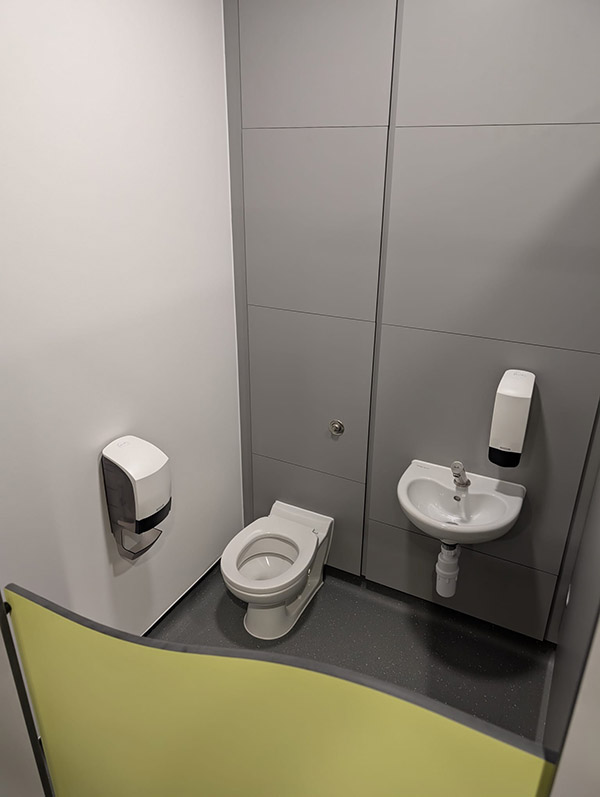
Providing accessible washroom facilities is about much more than meeting legal requirements. A well-designed disabled toilet should offer comfort, dignity, independence, and ease of use for every person who relies on it. Whether it’s installed in an office, school, healthcare setting, leisure centre, retail space, or public building, an accessible washroom should be intuitive, practical, and welcoming.
While compliance with UK accessibility standards is essential, focusing solely on regulations can sometimes overlook the real needs of the people using the space. The most successful disabled toilet refurbishments balance technical compliance with thoughtful design, ensuring facilities are not only legally compliant but genuinely usable.
At Macaw Washrooms, we design and install accessible washroom solutions that combine functionality, durability, and user-focused design. Here’s how to achieve the right balance when refurbishing a disabled toilet.
Start with Compliance, But Design for People
Any disabled toilet refurbishment should begin by considering the relevant accessibility standards and regulations, including guidance such as Approved Document M of the Building Regulations and BS 8300, which help ensure facilities are accessible for a wide range of users.
However, compliance should be viewed as the starting point rather than the end goal.
A washroom may technically meet regulations while still feeling cramped, awkward to navigate, or difficult to use. Good design goes beyond measurements and layouts by considering how people actually interact with the space in everyday situations.
Creating an accessible washroom means thinking about comfort, ease of movement, privacy, and independence alongside regulatory requirements.
Prioritise Space and Ease of Movement
One of the most important aspects of an accessible washroom is ensuring users can move around safely and comfortably.
Sufficient manoeuvring space is essential for wheelchair users and anyone with limited mobility. Fixtures should be positioned carefully to allow easy access without creating unnecessary obstacles.
A well-planned layout makes everyday tasks simpler while reducing the risk of accidents or frustration. This includes ensuring there is enough room to approach the toilet, wash basin, and other facilities comfortably, whether independently or with assistance.
Good spatial planning also benefits carers and support workers who may need to assist users safely.
Choose Durable and Accessible Fixtures
The fixtures selected during a refurbishment play a significant role in both usability and long-term performance.
Grab rails, wash basins, sanitary fittings, mirrors, and accessories should all be positioned at appropriate heights and designed for ease of use. At the same time, products need to withstand the demands of busy commercial environments without compromising accessibility.
High-quality commercial fittings offer greater durability while maintaining an attractive appearance, helping facilities remain both functional and welcoming for years to come.
Carefully chosen fixtures also reduce maintenance requirements, ensuring accessible toilets remain available when users need them most.
Consider Every User’s Experience
Accessibility requirements vary significantly from person to person. Some users may rely on wheelchairs, while others may have visual impairments, reduced dexterity, hidden disabilities, or age-related mobility challenges.
A successful refurbishment considers a wide range of needs rather than focusing on a single user group.
Features such as easy-to-operate doors, clear layouts, contrasting colours for improved visibility, appropriate lighting, and intuitive fixture placement all contribute to a more accessible environment.
The goal is to create a washroom that feels comfortable and straightforward for every visitor who uses it.
Don’t Overlook Hygiene
Accessible washrooms should be just as easy to clean and maintain as they are to use.
Modern materials and hygienic design features can help improve cleanliness while reducing maintenance time. Smooth wall panels, durable surfaces, and high-quality fittings are easier to keep clean and better equipped to withstand the demands of commercial environments.
Sensor-operated taps and flush systems can also improve hygiene by reducing touchpoints, while robust finishes maintain their appearance despite frequent use.
Clean, well-maintained facilities contribute to both user confidence and overall visitor satisfaction.
Future-Proof Your Washroom
Accessibility standards and user expectations continue to evolve. When investing in a refurbishment, it’s sensible to think beyond today’s immediate requirements and consider how the facility will perform in the future.
Choosing durable materials, flexible layouts, and high-quality commercial products helps ensure the washroom remains practical and compliant for many years. It can also reduce the need for frequent upgrades or reactive maintenance, providing better long-term value for building owners and managers.
Future-proofing also demonstrates a commitment to inclusivity and accessibility as your organisation continues to grow.
Accessibility Reflects Your Organisation
For many visitors, the condition of accessible facilities reflects the wider standards of the organisation itself. A clean, modern, thoughtfully designed disabled toilet demonstrates that accessibility has been treated as a genuine priority rather than simply a regulatory obligation.
Whether your building welcomes customers, patients, employees, students, or members of the public, providing high-quality accessible facilities helps create a more inclusive environment where everyone feels valued and supported.
Investing in accessibility is an investment in both your building and the people who use it.
Accessible Washroom Solutions from Macaw Washrooms
At Macaw Washrooms, we specialise in designing and refurbishing disabled toilets that balance full compliance with practical, user-centred design. We work closely with clients across a wide range of sectors to create accessible washroom facilities that are durable, hygienic, and tailored to the needs of each building.
Whether you’re upgrading an existing accessible toilet or planning a complete washroom refurbishment, our experienced team can help you deliver a solution that supports every user while meeting the highest standards of quality and performance.
Because true accessibility isn’t just about meeting regulations—it’s about creating spaces that work for everyone.