
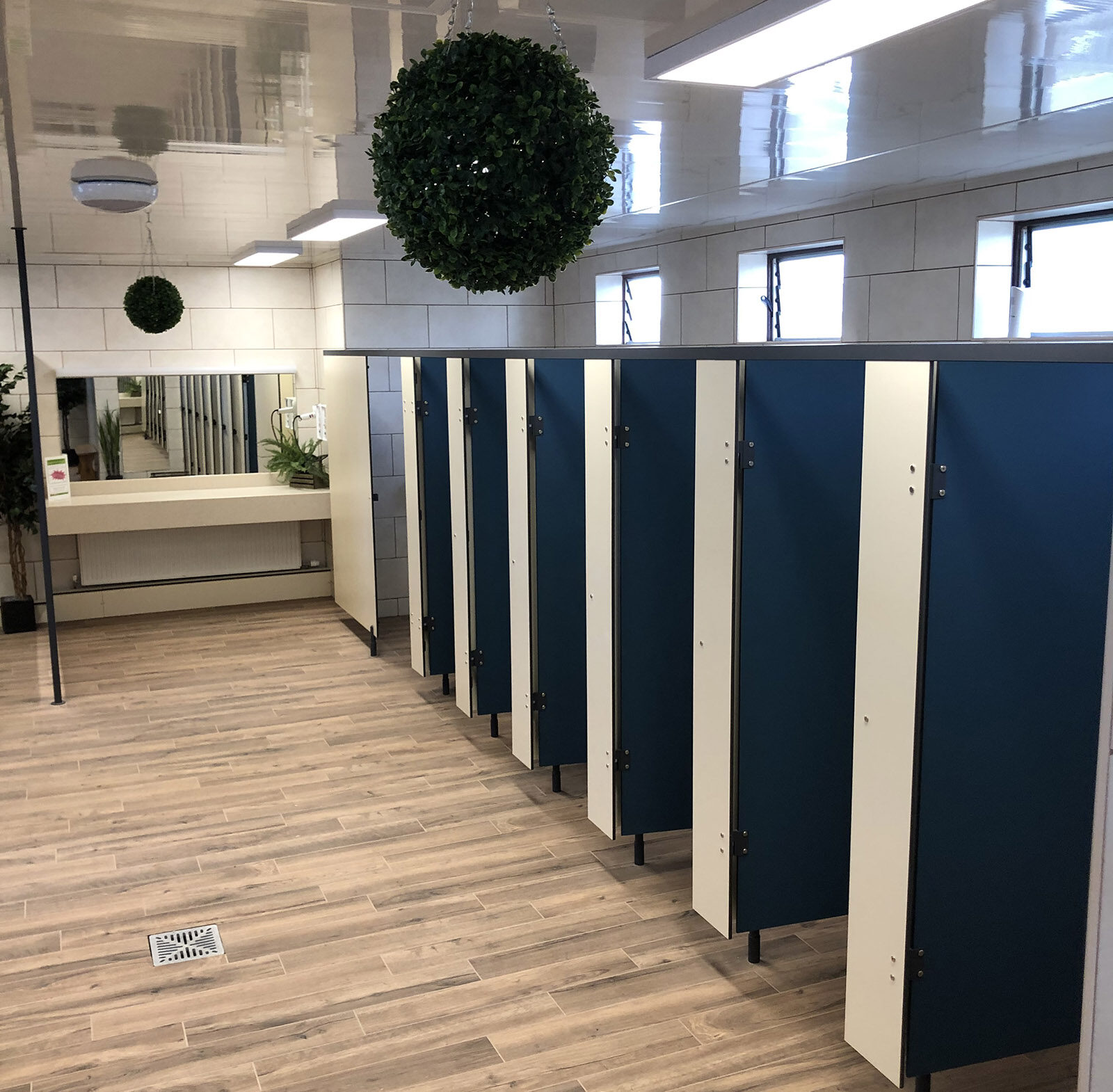
Washrooms rarely fail overnight. They wear down in small ways, a hinge that never quite settles, a vanity that stains no matter how hard the cleaners work, a layout that once worked and now creates queues every lunchtime. For facilities managers and business decision-makers, spotting those signals early is often cheaper than waiting for a breakdown. If you are weighing up commercial washroom refurbishment, these seven signs help you judge whether another patch-up will do, or a proper upgrade is overdue.
1. Repairs are becoming the routine, not the exception
When call-outs for leaks, loose doors, failed flush valves or cracked panels arrive month after month, the true cost is rarely just the invoice. Staff time, temporary closures and frustrated users add up. Targeted commercial washroom refurbishment replaces the weak points properly: cubicles, sanitaryware, vanities and commercial-grade fixings, rather than keeping a tired system on life support.
2. Peak times mean queues and frustration
If people wait outside at shift change, break times or event peaks, capacity or layout no longer matches how the building is used. Reconfiguration (more cubicles, better circulation, or a smarter split between facilities) is often the real fix, not another sign asking people to be patient.
3. The space looks dated, even when it is freshly cleaned
Clients, staff and visitors notice washrooms. Scuffed laminates, mismatched fittings and tired lighting can undermine a well-run workplace, school, leisure site or medical premises. Fresh finishes restore a clean, dependable first impression without rebuilding the whole room.
4. Accessibility feels like an afterthought
Grab rails in the wrong place, tight turning circles, or fixtures that do not support independent use are a compliance and dignity issue. If accessible provision has not been reviewed against current expectations, including Document M thinking, that alone can justify a planned upgrade. See Macaw’s DDA compliance guide.
5. Surfaces and fittings fight the cleaning team
Porous materials, awkward joints and fixtures that trap water make hygiene harder than it should be. When cleaners work hard and the room still looks tired by midday, the problem is usually specification, not effort. Easy-clean finishes support daily maintenance, without confusing design-and-install work with separate sanitary-bin or air-care contracts.
6. Water and energy use feel out of step
Dripping taps, inefficient flushes and always-on lighting quietly inflate running costs. Dual-flush WCs, flow-restricted taps, sensor lighting and efficient hand dryers are ordinary upgrades in modern commercial washroom refurbishment, improving utilities and user experience.
7. The building has changed, but the washroom has not
Headcount growth, a new tenant mix, longer hours or a different visitor profile can leave facilities under-sized or poorly zoned. When the room no longer matches the operation around it, making do usually costs more in complaints and temporary fixes than a planned redesign.
What to do next
If several of these signs sound familiar, a site walk-through beats another round of reactive repairs. Macaw Washrooms design, supply and install commercial, school, medical and leisure washrooms across the UK, planning programmes around live buildings where possible. For a straightforward chat, call 01509 467 417, email info@macaw-washrooms.co.uk, or use the contact page. Based at Church Court, Belton Street, Shepshed, Loughborough LE12 9AA.